Xianxia world Logic
Discover the Fascinating xianxia world logic: Explore Cultivation Rules, Ancient Artifacts, Spiritual Energy, and Popular Tropes Explained Simply for Fans, Beginners, and Fantasy Enthusiasts
CULTIVATION NOVELSXIANXIA NOVELWHAT IS XIANXIACLICHES XIANXIA NOVELXIANXIA WORLD LOGIC
12/14/20253 min read
Welcome to ReviewChill, blogs for chill people. Simple explanations, no complications. And best of all, short.
What is Xianxia?
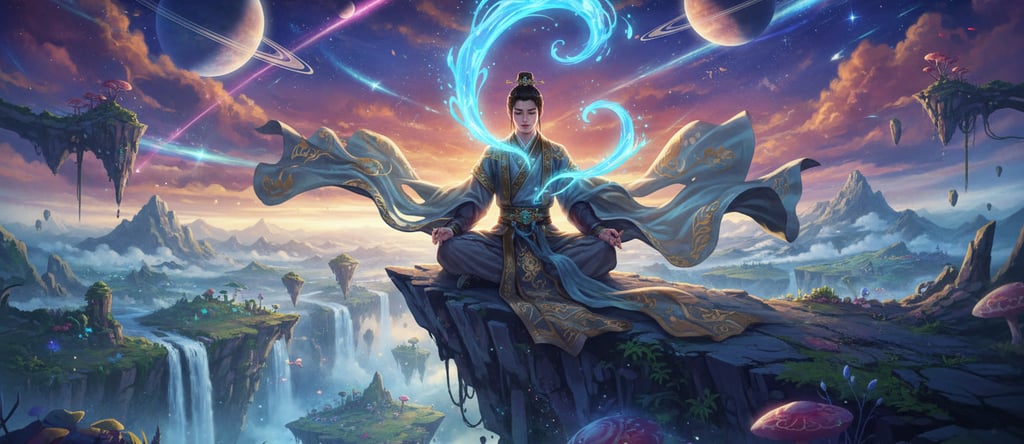
Xianxia is a Chinese fantasy genre where characters cultivate spiritual energy to become stronger, achieve immortality, and perform supernatural feats, in worlds filled with sects, mystical techniques, and power hierarchies based on cultivation levels.
In this genre, it’s common to encounter descriptions of people flying, floating mountains, impossible techniques, ancestors’ souls trapped in objects, jade beauties causing discord, opportunities appearing once every hundred thousand years, young (and not-so-young) arrogant masters, and protagonists who rise from nothing to godhood—even when the heavens and the entire world are supposedly against them.
The Logic of Xianxia Worlds
At first glance, Xianxia worlds seem completely structured and logical because they use elements of the real world—mainly in the organization of hierarchies and power—but exaggerated to the extreme.
Let’s look at their most common rules.
🔹 Destiny matters more than effort
The first unwritten rule of any Xianxia world is simple:
If you don’t have talent, you don’t matter.
Although each story has its own setup, one of the most common tropes is the spiritual root:
the basic requirement to sense spiritual energy and begin cultivating immortality.
Depending on the type and quality of this root, cultivators are ranked at different talent levels.
Those born without it are automatically excluded from the system.
In many stories, not all beings have a spiritual root. Only a few are “chosen” by destiny, and there are no easily replicable ways to change this—except for unique opportunities that appear once every hundred thousand years, or something similar.
Thus, most mortals can do nothing but accept their fate. Going against the heavens is not an option… unless you’re the protagonist, or a so-called Child of the Heavens.
🔹 Power is not moral; it’s hierarchical
In Xianxia worlds, good and evil are secondary concepts. What truly matters is cultivation level.
Those with more power:
Decide what is just
Define what is legal
Can humiliate, kill, or forgive without consequences
This explains why:
Sects operate like independent kingdoms
Elders always have the final say
Justice is almost never impartial
🔹 Resource “scarcity” drives conflict
“This opportunity only appears once every 100,000 years.”
Phrases like this are not exaggerations.
They are the main engine of Xianxia storytelling.
Worlds are designed with:
Limited resources
Incomplete techniques
Fragmented inheritances
Rare and unique events
The logic is simple:
If everything were accessible, there would be no conflict.
Scarcity forces:
Competition among cultivators
Wars between sects
Betrayals, alliances, and sacrifices
Sometimes conflicts seem exaggerated or even ridiculous. But within the genre’s logic, it makes sense:
when someone decides to cultivate immortality, they often do so with the mindset of taking on everyone.
🔹 The old eras were better
Another constant in Xianxia is clear: The ancient eras were superior.
In almost every story:
Ancient cultivators were stronger
Original techniques were more complete
Ancient artifacts surpass modern ones
This serves two narrative purposes:
Justify why the current world is “declining”
Allow the protagonist to access ancient power and stand out
It’s not nostalgia.
It’s a structural tool of the genre.
🔹 The world is not fair
From the outside, Xianxia worlds seem arbitrary. But from within, they are strangely consistent.
If someone is weak:
They will be exploited
They will be humiliated
They will be ignored
If someone becomes strong:
The world changes how it treats them
Rules become flexible
Enemies appear
The world does not promise justice. Only internal consistency.
Contradictions We All Accept
If you’ve been reading Xianxia for a while, you’ve probably noticed clear contradictions in its logic and premise. Contradictions that many authors and readers happily ignore to enjoy the fantasy of power: the rise of a nobody to a supreme god.
⚠️ Cultivators oppose destiny… while depending on it
If cultivators claim to defy destiny and the heavens, why can only those favored from birth do it?
If mortals are destined to die as mortals, then they shouldn’t even be born with spiritual roots in the first place.
⚠️ Millennia-old elders with teenage tempers
Immortal cultivators don’t become strong overnight. Timeframes often span tens or hundreds of thousands of years, and their lifespan extends as they advance in cultivation.
Many powerful cultivators are literally beings who have lived thousands of years, accumulating Dao knowledge and stabilizing their cultivation to avoid internal conflicts caused by unchecked emotions.
And yet…
Many stories portray these “wise elders” as hot-blooded young-looking characters, impulsive and easily provoked, usually to create conflict with the protagonist and their companions.
⚠️ The world limits everyone—except the protagonist
The protagonist is always the exception.
They don’t have luck because they’re the protagonist; they are the protagonist because they have luck.
That’s why almost every story needs an initial Xianxia opportunity:
Objects containing ancestors’ souls
Forgotten ancient inheritances
Opportunities appearing once every 100,000 years
Objects falling from higher realms that break the world’s rules
Without these, there is no story.
Conclusion
Xianxia worlds don’t operate under realistic, moral, or modern logic. They operate under their own exaggerated, contradictory, yet internally consistent logic.
And although these contradictions are obvious, they are precisely what make the power fantasy so effective.
Because Xianxia isn’t trying to be fair. It’s trying to be satisfying.
And once you accept its rules, it’s very hard to stop reading.
If you read Xianxia, you’ve probably recognized more than one of these situations.
© 2025. All rights reserved.